Programmers: Driving the Digital Future of Companies and Governments
Discover how programmers are driving the digital revolution and the future of companies and governments in our latest article.

Discover how programmers are driving the digital revolution and the future of companies and governments in our latest article.

Discover how the generative network of Singularity, ChatGPT-4, with 100 trillion parameters, revolutionizes artificial intelligence.

Discover how Artificial Intelligence is helping to conserve, protect, and manage water effectively.

The use of Cloud has increased in recent years, according to the XI Report of National Indicators of Science, Technology, Innovation.

Carla Sáenz, a specialist at the PAHO, highlighted that AI systems need diverse and inclusive databases so that the benefits impact the entire population.

Multi-Agent architecture enables the effective implementation of BIAN (Banking Industry Architecture Network) principles by introducing an intelligent layer that orchestrates the bank’s Service Domains. Artificial intelligence agents interpret requests from customers or employees, identify intent, and coordinate interactions with banking capabilities exposed through APIs, while keeping the experience, business, and data layers decoupled. This approach also enables Composable Banking, where capabilities are built as independent services that can be dynamically combined to support different customer journeys, allowing banks to build more modular, scalable, and service-oriented platforms.
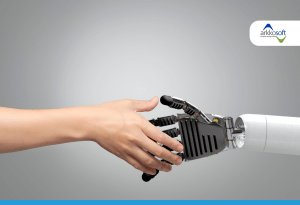
AI in Costa Rica has evolved from experimentation to a strategic priority. The challenge is no longer testing tools, but generating measurable impact. With strong leadership, reliable data, and integration into key processes, AI moves beyond pilot projects and becomes a sustainable competitive advantage.

In 2026, the most competitive companies will not be those that adopt the most technology, but those that use it with purpose, measurable returns, and risk control. There are no universal formulas: each organization must choose technology based on its reality, data, and priorities. Trends such as practical AI, automation, strategic data use, cybersecurity, and scalable solutions will define the year. The focus will be on a few high-impact use cases, well-prepared data, and clear governance.

Generative artificial intelligence has rapidly evolved from experimentation into a strategic priority. While creating proofs of concept is relatively easy, moving them into production and scaling solutions in a secure, well-governed, and business-integrated way remains a major challenge. This challenge is even greater with agentic AI, where multiple agents collaborate and require a clear strategy to avoid failures when scaling. Success depends on a lifecycle that includes ideation, value modeling, a strong data strategy, and a focus on minimal usable solutions that evolve with security and responsibility.

Artificial Intelligence has become a powerful tool that simplifies tasks and enhances cybersecurity, but it can also create dependency and weaken human critical thinking. While it protects, it is also used by attackers, making it a potential threat. The challenge is not to compete with AI, but to use it wisely to strengthen—rather than replace—our intelligence.

The success of an IT project does not depend solely on technology, but on the balance between leadership, communication, and management. An effective leader inspires, listens, and motivates the team, while clear communication connects all stakeholders and prevents misunderstandings. Proper management allows for planning, anticipating risks, and maintaining alignment with objectives. Moreover, effectively handling changes strengthens the client relationship and ensures quality. Together, this triad drives projects that truly create value and deliver sustainable results.